
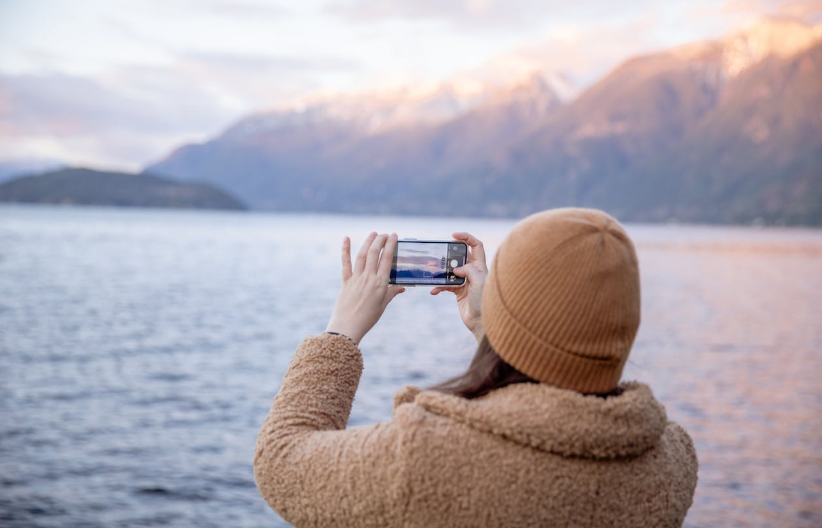
Exploring new landscapes should feel liberating and immersive, rather than resembling a physical endurance test involving heavy equipment bags and tangled wires. Many modern travelers realize that carrying massive cameras hinders their ability to enjoy the moment, leading to a significant surge in minimalist content creation worldwide. Capturing cinematic memories is now entirely possible with a pocket-sized setup that prioritizes spontaneity and ease of use over technical complexity.
The Evolution of Travel Filmmaking
In the past, achieving cinematic quality required bulky bodies, multiple lenses, and heavy tripods that slowed down every step of the journey. Travelers often spent more time setting up gear than experiencing the culture, resulting in beautiful footage but missed real-life connections. This trade-off is no longer necessary as technology miniaturizes high-quality sensors into smaller devices.
Today, a compact vlogging camera can rival traditional systems in dynamic range and color science while fitting comfortably in a jacket pocket. The shift allows creators to blend in with the crowd, capturing authentic moments without drawing attention to themselves as a production crew. This evolution places the focus back on the story rather than the specifications of the tools used.
Prioritizing Portability Over Specifications
When you eliminate the physical burden of heavy gear, your energy shifts from managing equipment to finding creative angles and unique narratives. A lightweight vlogging camera encourages you to climb that extra hill or navigate a crowded market with ease. The best camera is truly the one you have with you and are willing to use instantly when a fleeting moment occurs.
Choosing a portable vlogging camera does not mean sacrificing essential features like resolution or frame rate capabilities. Modern devices are engineered to handle high-resolution recording and slow-motion capture, which are essential for cinematic travel montages. The key is to find a vlogging camera that balances distinct video quality with a form factor that never becomes a burden during long days of exploration.
Understanding Stabilization Features
Shaky footage is the quickest way to ruin the cinematic feel of a travel video, making stabilization a critical factor. Traditional setups required mechanical gimbals that were often larger than the camera itself and difficult to balance quickly. Now, an advanced vlogging camera often includes built-in stabilization algorithms that mimic the smoothness of a physical gimbal without the extra bulk.
This digital or optical stabilization allows for walking shots and panning movements that look professional and intentional. Whether you are hiking up a rugged trail or walking through a cobblestone street, a stable vlogging camera ensures the viewer remains focused on the scenery. Mastering your body movement while holding a vlogging camera further enhances this effect, creating a floating camera look.
See also: The Complete Guide to Home Services That Enhance Safety and Functionality
Mastering Natural Lighting Conditions
Lighting is the paintbrush of cinematography, and traveling light means relying heavily on available natural light sources. A high-quality vlogging camera will have a sensor capable of handling diverse lighting situations, from the harsh midday sun to the dim ambiance of a night market. Learning to read light is more valuable than carrying artificial lighting rigs that ruin the atmosphere.
Utilizing the Golden Hour
The hour after sunrise and the hour before sunset provide the most flattering light for any vlogging camera sensor. The soft, directional light creates depth and texture, instantly adding a cinematic quality to your footage without post-production tricks. Planning your shoots around these times allows your vlogging camera to capture rich colors and dramatic shadows naturally.
Handling Low Light Scenarios
Urban travel often involves filming at night, which can challenge smaller sensors found in a typical vlogging camera. However, by locating practical light sources like neon signs or streetlamps, you can illuminate your subject effectively. A capable vlogging camera will maintain low noise levels, preserving the mood of the evening without introducing distracting grain into your travel memories.
Composition Techniques for Small Devices
Composition remains the foundation of visual storytelling, regardless of the size of your vlogging camera. Because you are not burdened by a tripod, you can experiment with unique angles that larger cameras cannot easily access. Placing your vlogging camera on the ground or holding it high above a crowd can reveal perspectives that standard eye-level shots miss entirely.
- Rule of Thirds: Align your subject along the grid lines of your vlogging camera screen to create a balanced and engaging image.
- Leading Lines: Use roads, fences, or rivers to guide the viewer’s eye directly toward the main subject of your frame.
- Framing: Utilize natural elements like archways or tree branches to frame your shot, adding depth and context to the footage captured by your vlogging camera.
- Symmetry: Look for reflections in water or glass to create perfectly symmetrical shots that feel deliberate and artistic.
- Depth of Field: Move your vlogging camera closer to a foreground object to create separation and a blurry background effect.
Audio Quality Considerations
Visuals often take center stage, but poor audio quality will immediately disconnect the audience from your travel experience. A built-in microphone on a standard vlogging camera has improved significantly, but wind noise remains a persistent enemy for outdoor creators. using a dedicated wind muff on your vlogging camera is a non-negotiable accessory for capturing clear ambient sounds.
The goal is to capture the atmosphere of the location, from crashing waves to bustling city traffic, which adds a layer of immersion. If you plan to speak directly to the vlogging camera, ensure you are close enough for your voice to dominate the soundscape. Clear audio transforms a simple video clip into a transportive memory that engages multiple senses.
The Art of Storytelling on the Go
A cinematic travel video is more than just a montage of pretty shots; it requires a cohesive narrative thread. Your vlogging camera is the pen with which you write this story, documenting the journey from departure to arrival. Focus on capturing the “in-between” moments—the transit, the meals, and the interactions—rather than just the famous landmarks.
- Establish the Scene: Start with a wide shot using your vlogging camera to show the viewer where you are.
- Introduce the Detail: Follow up with a close-up shot of a specific texture or object relevant to the location.
- Show the Action: Record movement, whether it is you walking or a local activity, to drive the pace.
- Capture the Reaction: Turn the vlogging camera on yourself to share your genuine emotional response to the environment.
- Transition Smoothly: Use movement or sound bridges to connect different scenes naturally.
Future-Proofing Your Travel Memories
Technology moves rapidly, but the principles of capturing a good image with a vlogging camera remain relatively constant. Investing time in learning the manual settings of your vlogging camera ensures you can adapt to any situation. Understanding ISO, shutter speed, and white balance allows you to push a small vlogging camera beyond its automatic limitations.
Ultimately, the gear matters less than the vision behind it, but having a reliable vlogging camera removes barriers to execution. The memories you capture are timeless, and using a tool that facilitates creativity ensures those moments are preserved beautifully. By mastering a compact vlogging camera, you ensure that your travel archives are as vivid and moving as the experiences themselves.


 11 Affordable Weight Loss Medication Providers Worth Your Money in 2026